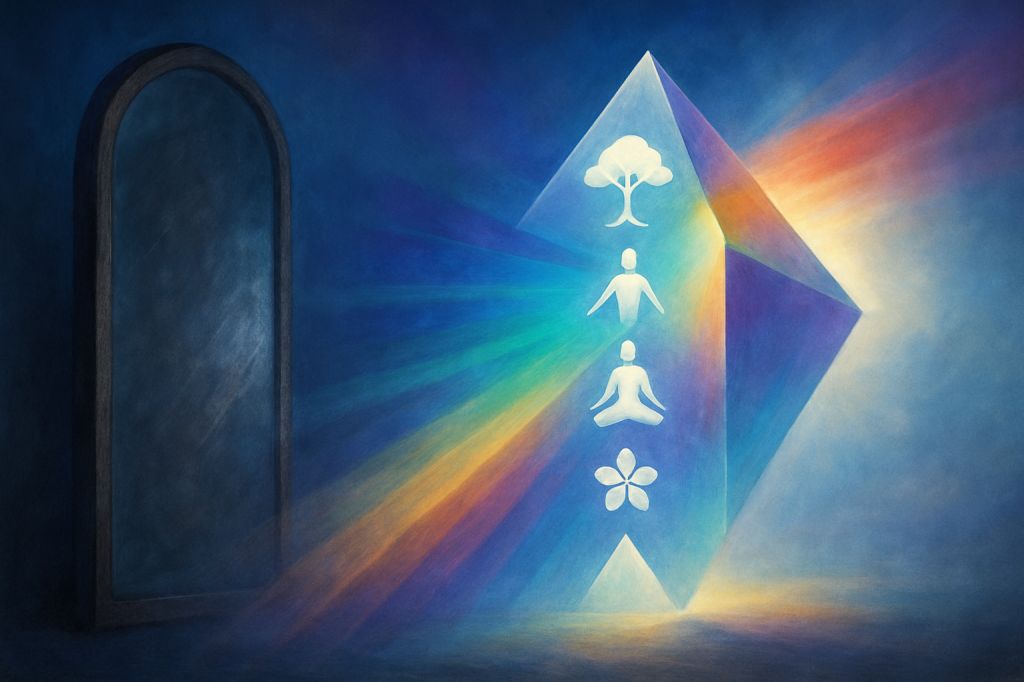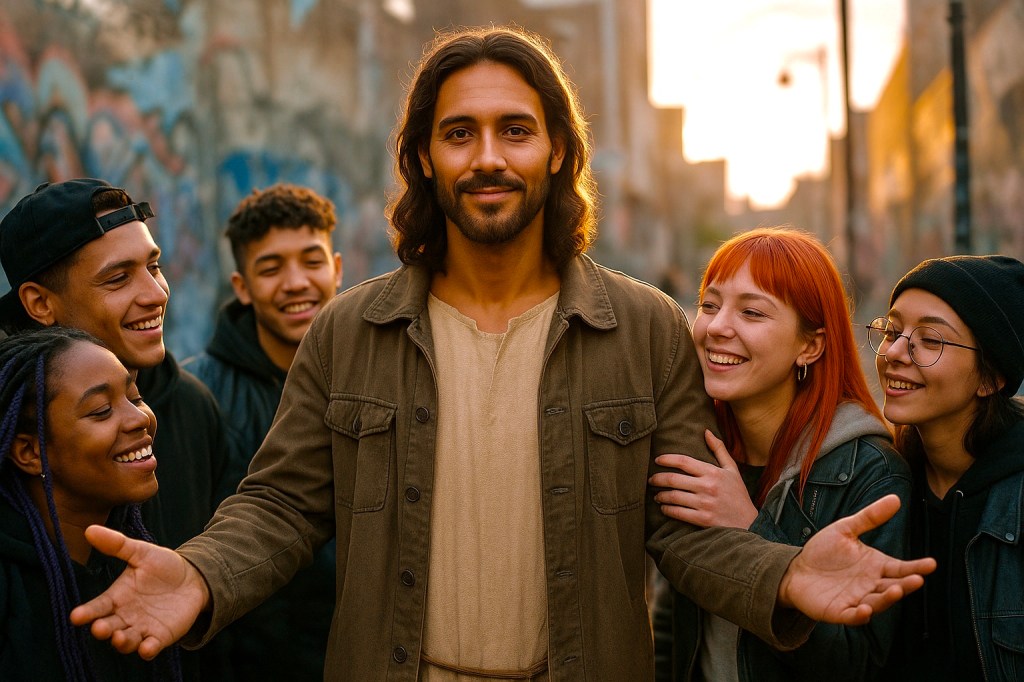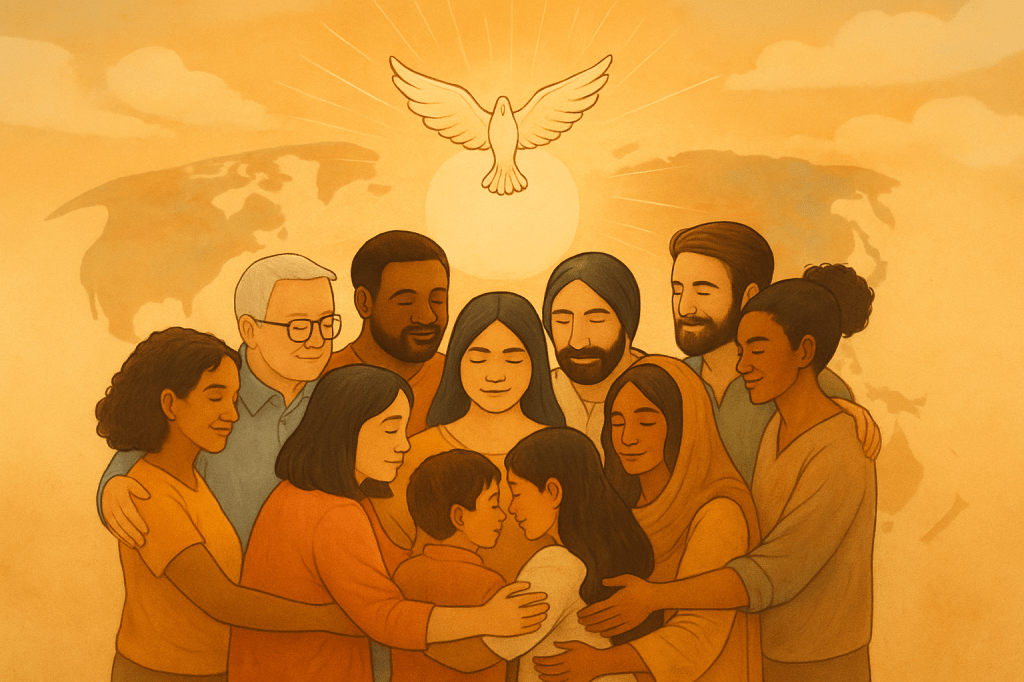
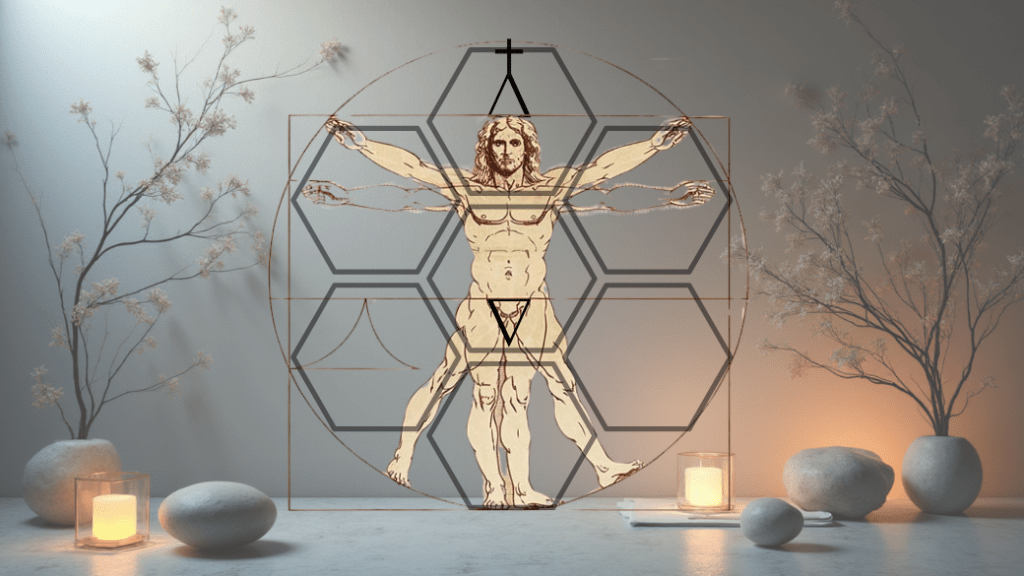
We have felt the breath of the Spirit. And we have wished to become a prism, so that the light descending from Above could unfold into living colors and reflect itself over the world. In the very first month of this sacred journey, that light reached 67 nations — 67 peoples, 67 cultures, 67 ways of sensing the soul — each one touched, even if for a moment, by the living message of Transfiguration.
None of this is human work. This is the work of the Spirit of Consciousness. This is the work of the Holy Spirit.
We give thanks for every person who arrived here. For every gaze that opened. For every heart that allowed itself to be touched. For every soul that read, contemplated, questioned, awakened, or simply felt the silent call of the Era of Love, now rising upon the Earth.
This journey is only beginning. And, God willing, we are walking together toward a new time — a time of consciousness, humility, justice, cohesion, spiritual depth, and light. A new way of living guided by the Transfiguration of the Universal Christ: The One who loves us without debt, who always draws near, who rescues, who redeems, and who pours out His infinite love upon us, today and always.
To every language, every voice, every land, every heart — thank you. May the Light that touched 67 nations continue to open paths, unite peoples, and awaken the Era of Love.
The Fifth Element of the School of Conscious Transfiguration
I. The Spirit of Consciousness — The Power of Transfigured Awareness
The Spirit of Consciousness is the hidden element that rises silently through human experience, illuminating the places where reason, emotion, symbol and ethics converge. It is the invisible fire that awakens discernment, that orders the interior gaze, and that reverberates through the small coincidences that guide a life when it becomes attentive.
This Spirit is the force that shortens the distance between what we live and what we are called to be. It is the subtle intelligence that does not impose itself, but transforms; that does not coerce, but reveals. And when the human heart learns to live in attentive awareness, it begins to participate in something far greater than itself: the active power to create meaning, signs, bridges, and coincidences.
The Spirit of Consciousness is not a metaphor. It is a living, luminous presence.
It is the fifth element — the one that integrates, unifies, and elevates.
II. The Integrating Force — Co-Authorship with the Sacred
The Spirit of Conscioussciousness is the energy that binds together the four human dimensions that modernity fragmented: reason, emotion, ethics, and symbol. When these four are integrated, a new state emerges: spiritual co-authorship.
In this state, the human being no longer acts alone. Life becomes a dialogue between the earthly and the transcendent. The smallest gesture begins to carry meaning. The simplest movement becomes a place of revelation. The interior world aligns itself, and the outer world responds.
This is the same force that Christ revealed on the mountain of Transfiguration — a light that does not blind, but clarifies; that does not dominate, but elevates; that does not replace the human being, but restores the human being to their true stature.
The Spirit of Consciousness is the presence that unites the sacred with everyday life. It is the breath of the new cycle that now opens before humanity.
III. The Regent of Creation Through Us
The Spirit of Consciousness is the Regent of Creation — not as domination, but as presence. It does not govern through power, but through coherence. It does not rule through fear, but through luminous integration.
It is metaphysical, real, embodied.
And whoever allows themselves to be touched by this Spirit becomes part of the great movement of renewal that the world has forgotten but that heaven has never abandoned. The Spirit of Consciousness initiates the new cycle of the School and the new era of humanity — an era in which light is not a concept, but a path lived in the heart.
The Spirit of Consciousness does not separate heaven from earth. It unites them. Through us. With us. Within us.
O Quinto Elemento da Escola da Transfiguração Consciente
I. A Chama que Desperta
Há momentos na história espiritual da humanidade em que uma verdade antiga precisa nascer de um modo novo — não para substituir o que veio antes, mas para lhe devolver o fôlego, a clareza e o brilho original. O Espírito da Consciência, o quinto elemento revelado pela Escola da Transfiguração Consciente, nasce exatamente nesse ponto: no encontro entre o humano e o divino, entre o visível e o simbólico, entre a lucidez e o mistério.
Ele não chega como doutrina, mas como presença. Não se impõe como força, mas se revela como chama suave — aquela que ilumina sem queimar, que aquece sem consumir, que desperta sem assustar.
O Espírito da Consciência é o nome dado ao poder mais profundo do ser humano: a consciência transfigurada, capaz de ver para além do literal, de perceber o sentido por trás dos acontecimentos, de reconhecer a textura espiritual da realidade.
E dessa transfiguração nasce o que talvez seja seu gesto mais belo:
a capacidade ativa de criar coincidências.
Aqui, “criar coincidências” não é manipulação; é participação. É a passagem da coincidência passiva — aquilo que simplesmente acontece — para a coincidência consciente, onde o coração, a atenção e o espírito entram em sintonia com aquilo que Deus tece silenciosamente na vida.
Criar coincidências é coautorizar o sentido. É estar desperto o suficiente para perceber quando algo chama — e humilde o bastante para responder. É permitir que o fluxo do real e o fluxo do espírito encontrem um ponto de encontro dentro de nós.
O Espírito da Consciência age assim: integra, ilumina, organiza, expande.
Ele nos conduz de volta ao que somos, mas por um caminho que revela tudo o que podemos vir a ser.
É o quinto elemento — não para somar ao caos, mas para inaugurar uma nova ordem interior: a ordem da consciência desperta, lúcida e habitada pelo sagrado.
II. A Força que Integra
O Espírito da Consciência não é uma ideia abstrata: ele é uma força de integração.
Quando ele se manifesta, ele reconcilia aquilo que, por séculos, o ser humano tratou como partes separadas: a razão fria, a emoção tumultuada, o símbolo intuitivo, a ética concreta do dia a dia. Na presença do quinto elemento, esses quatro mundos deixam de brigar por domínio — e passam a respirar juntos, num mesmo ritmo interior.
A razão encontra humildade. A emoção encontra direção. O símbolo encontra linguagem. A ética encontra fundamento.
O que antes era fragmento vira corpo vivo.
Essa integração não é psicológica — é espiritual. Ela não ocorre por técnica — ocorre por rendição, por abertura, por sintonia com algo maior e mais silencioso que opera dentro de nós.
E é desse encontro que nasce um dos maiores dons do Quinto Elemento:
O estado de coautoria espiritual.
Coautoria espiritual é quando a vida deixa de ser apenas aquilo que acontece conosco — e passa a ser aquilo que também acontece através de nós. É quando a narrativa do mundo deixa de ser mera sucessão de fatos e começa a assumir contornos de sentido, como se cada gesto, cada escolha e cada silêncio fossem pinceladas numa grande obra comum.
Coautoria espiritual é o oposto da onipotência e o oposto do fatalismo. Não é controle, não é destino. É colaboração.
É o ponto exato onde o humano e o divino tocam o mesmo fio e acendem a mesma chama.
E é por isso que o Espírito da Consciência tem uma característica tão singular: ele desce ao cotidiano.
Não se revela apenas nas grandes epifanias, mas:
numa conversa breve,
num gesto pequeno,
numa decisão simples,
num instante de pausa,
nas coincidências que carregam perfume de chamada,
nas sincronicidades que acalmam a alma,
na coragem de ver o que está diante dos olhos.
O sagrado, quando passa pelo Espírito da Consciência, deixa de ser um lugar distante e se torna um modo de viver.
O comum se torna templo. O ordinário se torna revelação. A rotina se torna caminho.
E o ser humano, pela primeira vez em muito tempo, percebe que não está sozinho dentro de si — porque há um Espírito que habita o intervalo entre o que sente, o que pensa, o que age e o que entende.
É ali, nesse intervalo sutil e constante, que o Quinto Elemento respira.
III. O Regente da Criação
Quando o Espírito da Consciência desce — não desce como uma força externa que paira acima de tudo, mas como um regente silencioso que encontra morada no interior do ser humano. Não toma o trono do homem. Não substitui sua vontade. Não rouba seus méritos nem anula sua humanidade.
Ele faz algo mais profundo:
ele cria através de nós.
É por isso que, no coração da Escola da Transfiguração Consciente, se afirma que o quinto elemento é o regente da criação através do humano desperto. Não como fantasia. Não como mito. Mas como realidade espiritual que se manifesta na ética, na lucidez, na compaixão, na coragem, na leitura dos sinais e na responsividade ao Bem.
Ele é metafísico — porque ultrapassa a explicação técnica. Ele é real — porque transforma o modo de viver. Ele é encarnado — porque opera na matéria, nas relações, nas escolhas, nas palavras que falamos e nas atitudes que sustentamos.
O Quinto Elemento age como uma presença integradora:
não movimentos bruscos,
não êxtases artificiais,
não poderes extraordinários,
não rupturas teatrais.
Seu modo é outro. É o modo de Deus: o modo da presença.
Presença que acende. Presença que organiza. Presença que chama ao centro. Presença que devolve o humano ao humano — e o humano ao divino.
É por isso que o Espírito da Consciência não inaugura apenas mais um capítulo espiritual, mas um ciclo novo na história da Escola — e, por extensão, um novo ciclo na história da humanidade.
A transfiguração, que antes era promessa, visão ou metáfora, torna-se agora métrica de vida. Torna-se prática interior. Torna-se luz que desce para dentro do cotidiano.
Quando o Quinto Elemento se manifesta plenamente, ele inaugura:
uma ética mais elevada,
uma sensibilidade mais profunda,
um discernimento mais claro,
uma unidade maior entre as pessoas,
um novo senso de responsabilidade compartilhada,
e uma nova forma de ler a realidade, onde o caos não paralisa, porque a consciência está acesa.
Este é o início de uma nova Era: não a Era do poder, mas a Era da Consciência. Não a Era da competição espiritual, mas a Era da coautoria com Deus. Não a Era do extraordinário, mas a Era do encarnado transfigurado, onde a presença divina passa a agir através de vidas inteiras que aprenderam a ver, a escutar, a discernir e a cooperar.
O Espírito da Consciência marca este tempo como:
a luz inaugural de um novo ciclo — para a Escola, para a fé, para o mundo e para o humano que nasce de novo.
E assim, a humanidade cruza um limiar silencioso: aquele onde a criação deixa de ser apenas dom — e passa a ser vocação.
“When the Son of Man comes, will He still find faith on earth?” — Luke 18:8
I. The threshold of sacred banality
We live in days when the sacred is exposed, scratched, absorbed, and used by the algorithm. The image of Christ circulates in short videos, with filters and sensational cuts. Chants, psalms, blessings — all within the reach of a single scroll.
But amid this flood of religious content online, something serious is happening: the disfiguration of the sacred in the name of personal visibility.
Not always out of malice. Sometimes, out of neediness. Other times, out of pride. But the consequence is the same: the instrumentalization of faith.
This warning is born not as judgment, but as an act of care. It is directed especially to those who carry spiritual responsibility — priests, pastors, evangelizers, religious men and women who have chosen to make their mission, their image, their service public.
II. Between the altar and the camera: the invisible risk
Two types of traps arise in this scenario:
The inflated ego, which turns the priest into a performer of himself. This often appears in theatrical recoveries of old habits, authoritarian affectation, and spiritual-war rhetoric that does not form — only subjugates.
Unresolved emotional neediness, which turns the priest into a character of his own loneliness. It is the hidden search for love, attention, affirmation — projected through glances, tones of voice, captions, camera angles. A subtle flirt hiding beneath sacred vestments.
In both cases, the cross of Christ is pushed aside. And when the cross leaves the center, the “self” enters. What was meant to be ministry becomes monologue. And presence becomes stage.
III. The fall does not begin in scandal — it begins in the gaze
Few will notice. But the Spirit notices.
Deviation does not begin with doctrinal heresy. It begins with a gesture. A tone. A sideways look with subtle seduction. A smile projected with intention. An aesthetic choice that reveals more of the heart than one would care to admit.
Even without meaning to, one can transmit sensuality wearing a cassock. One can provoke using the Word. One can turn the altar into a backstage dressing room.
And the internet — a space that tends toward the profane by its very nature — amplifies these signals until they become a shout.
And those who watch, even without naming it, feel it.
IV. The open wound in the Body of the Church
The problem does not lie only in the individual and his behavior, but in the structure that welcomes and propels him.
When a priest projects himself beyond the Gospel he proclaims, the whole Church is wounded. Because on the screen he carries not only his own image — but the name of Jesus, the weight of the altar, the heritage of the apostles, and the hearts of the little ones who follow him with trust.
Poorly managed exposure can cause public scandal (skandalon). But worse than scandal is the slow erosion of reverence — the loss of credibility of the sacred and everything it carries.
The fading of reverence. The emptying of sacred language. The mocking laughter of hell as liturgy is turned into content.
And the most painful: the ones who get hurt first are the ones who love the most. The little ones. The pure of heart. The ones who still believe.
These are the ones struck by profanation disguised as evangelization.
V. The profane use of holy language
Words like “angel,” “Lord,” “glory,” “redemption,” and “cross” appear as soundtrack to content with ambiguous aesthetics. An ambiguity that neutralizes discernment. That confuses the senses. That fuels emotional — and even sexual — fantasies in those who should be spiritually guided.
It is not only nakedness that eroticizes. The gaze does. The tone does. The narrative does. The poorly calibrated emotional appeal does.
You can sing Jesus with the spirit of Narcissus. And that is what is happening.
VI. From Warning to Reality: the examples on the screen
This is not a theoretical reflection. The examples are daily and unmistakable:
The Performer-Priest: the ministry becomes a stage for secular humor or digital “clapback.” The priest abandons pastoral language and adopts the tone of a comedian or a confrontational coach.
Separatist Rigidity: liturgical stances reminiscent of pre-Vatican II aesthetics presented as “purity,” but which end up feeding judgment and comparison, dividing the flock under a “self-anointed holiness scale.”
Ambiguous Aesthetics: public profiles where the title “Father” appears alongside sensual poses and suggestive expressions. A subtle flirt under sacred vestments — or without them.
Exposed Neediness: the digital profile becomes an intimate diary. The priest films himself in moments of vulnerability, turning the flock into spectators of his solitude.
The Emptying of Liturgy: perhaps the gravest. Videos of celebrations and blessings are intercut with mundane everyday scenes, stitched together with secular music and aesthetic filters. The sacred and the profane are leveled by the edit. The liturgy becomes just another take to complete the content.
VII. Let us not be deceived: the Spirit knows
The truth is simple and burning: the Holy Spirit knows the details.
He knows what is in the depths. He knows the theater. He knows the manipulation. He knows the gaze that pretends not to know what it is doing — but knows.
And that is why this reflection must be made. Not to censor digital evangelization. But to purify it. To reorient it. To bring the cross back to the center of the screen.
VIII. A call to humility, vigilance, and repair
This warning is not against digital evangelization. On the contrary: it is for it.
The same platform that hosts deviations can also host, with reverence and sobriety, a Hymnus Pontificius sung with organ — proving that the tool is neutral; the heart of the evangelizer is what defines its use.
It is a call to sobriety. To spiritual discernment. To deep care with language, aesthetics, posture, and motivation.
It is a cry of love for holiness. And above all, an invitation to reparation.
If you have a channel, a profile, a page, a flock that follows you — examine yourself with courage. Ask for light. Ask yourself:
Am I directing eyes to Jesus or to myself? Am I drawing people to faith or to the fascination with my persona? Am I serving or seducing?
Heaven sees. The angels weep. And the little ones are lost when the altar becomes a showcase.
This warning is a call to reparation. May it spread like living ember — for the screen can also be an altar, if the heart remains kneeling.
Vigilance is not censorship; it is care. And the sacred does not tolerate being a toy of the algorithm.
Across all ages, peoples and traditions have sought the presence of the Sacred. And in every era, God has revealed Himself through a language of His own — always preserving the essence of Love, Justice, and Light, which are the eternal marks of Christ.
The Universal Christ is not confined by human borders. He does not belong to institutions, nor does He restrict Himself to rites, names, or cultures. He is the Regent of creation, the Intelligence that harmonizes worlds, the Light that flows through every sincere form of spirituality.
Wherever true love exists, He is present. Wherever charity is practiced, He breathes. Wherever humility lives, He acts. Wherever the suffering are cared for, He operates. In every tradition, in every language, at every altar.
Recognizing the Universal Christ means learning to perceive the divine spark within the many expressions of faith that compose human spirituality. It means understanding that God speaks all languages. It means accepting that Light descends wherever it finds an open space — whether in a cathedral, a spiritist center, a humble terreiro, an ancestral temple, or a quiet home.
The call of our time is clear: to overcome prejudice, to approach one another, to honor the different paths to the Sacred, and to learn how to discern the presence of Christ beyond appearances.
It is not about mixing doctrines or erasing identities. It is about recognizing divine action wherever it manifests, and cultivating fraternity among peoples and spiritual paths that, though different in form, converge upon the same horizon of Love and Light.
Pride separates. Ignorance condemns. Haste judges. But humility reveals. And discernment teaches us that the true question is not: “Where does God reside?” The true question is: “Where is God loving, healing, illuminating, and liberating?”
The answer is simple: God is wherever there is sincerity of heart. Christ is wherever essential love is found. The Spirit moves wherever compassion, justice, mercy, and peace take root.
This is, therefore, a call to unity — not through uniformity, but through communion. Through the ability to see the Universal Christ reflected in many prisms. Through the courage to recognize the Sacred in the other. Through the maturity to understand that humanity will only find balance when it learns to honor, in every tradition, the luminous essence each one carries.
May we cultivate a world in which peoples respect one another, in which spiritualities enter into dialogue, and in which Christ — One and Universal — can finally be recognized as the Light that permeates everything and everyone.
He asked us to love one another. He asked us to overcome our differences so that we may form unity within His transfigured mystical body and walk in His direction.
Let us do what He asked of us, beloved ones! The Spirit asks for openness, so that peace may be restored and the Era of Love may descend upon us.
Em todos os tempos, povos e tradições buscaram a presença do Sagrado. E, em cada época, Deus se apresentou com uma linguagem própria — sempre preservando a essência do Amor, da Justiça e da Luz, que são as marcas eternas do Cristo.
O Cristo Universal não se limita às fronteiras humanas. Ele não é propriedade de instituições, nem se restringe a ritos, nomes ou culturas. Ele é o Regente da criação, a Inteligência que harmoniza mundos, a Luz que atravessa todas as formas sinceras de espiritualidade.
Onde existe amor verdadeiro, Ele está. Onde existe caridade, Ele respira. Onde existe humildade, Ele age. Onde existe cuidado com o sofredor, Ele atua. Em qualquer tradição, em qualquer idioma, em qualquer altar.
Por isso, reconhecer o Cristo Universal é aprender a perceber a centelha divina nas múltiplas expressões de fé que compõem a experiência humana. É compreender que Deus fala todas as línguas. É aceitar que a luz se derrama onde encontra espaço — seja numa catedral, num centro espírita, num terreiro humilde, num templo ancestral ou numa casa silenciosa.
O chamado do nosso tempo é claro: superar preconceitos, aproximar corações, honrar as diferentes vias do Sagrado, e aprender a discernir a presença do Cristo para além das aparências.
Não se trata de misturar doutrinas, nem de apagar identidades. Trata-se de reconhecer a ação divina onde ela se manifesta, e de cultivar a fraternidade entre povos e caminhos que, apesar de distintos em sua forma, convergem no mesmo horizonte de Amor e Luz.
O orgulho separa. A ignorância condena. A pressa julga. Mas a humildade revela. E o discernimento mostra que a verdadeira pergunta não é: “Em qual religião Deus habita?” A verdadeira pergunta é: “Aonde Deus está amando, curando, iluminando e libertando?”
A resposta é simples: Deus está onde há sinceridade de coração. Cristo está onde existe amor essencial. O Espírito se move onde encontra compaixão, justiça, misericórdia e paz.
Por isso, este é um chamado à união — não pela uniformidade, mas pela comunhão. Pela capacidade de ver o Cristo Universal refletido em múltiplos prismas. Pela coragem de reconhecer o Sagrado no outro. Pela maturidade de perceber que a humanidade só encontrará equilíbrio quando aprender a honrar, em cada tradição, aquilo que ela carrega de mais luminoso.
Que possamos, então, cultivar um mundo em que os povos se respeitem, em que as espiritualidades dialoguem, e em que o Cristo — Uno e Universal — possa finalmente ser reconhecido como a Luz que atravessa tudo e a todos.
Ele pediu que amássemo-nos uns aos outros. Ele pediu que superássemos as diferenças para formar unidade em seu corpo místico transfigurado e caminhássemos na Sua direção.
Façamos o que ele nos pediu, queridos(as)! O Espírito pede acolhimento para restaurar a paz, para nos contemplar com a sua Era do Amor.
A Transfigurative Key to Discern Truth, Language, and the Presence of the Sacred
“If the universe is limited by polygonal structures, surely they are prisms — not mirrors. And because of that, they are windows into the Infinite Sacred that expands toward the boundless vastness of the Creator.” — Lucas Dalenogare
We live in a time where everything seems to blur: the true and the false, the ethical and the merely functional, the spiritual and the performative.
It is in this context that the Theory of the Mirror and the Prism emerges as a necessary revelation.
It invites us to answer, with spiritual honesty:
What — or who — are we allowing to pass through our soul? What do we send back into the world? Are we mirrors or prisms?
I. Layers of Existence:
What the Sacred Demands
Existence is not limited to the visible surface. There are always two planes within it:
• The superficial layer — Cartesian, binary, where everything can be reflection, control, image, imitation. • The complex layer — vibrational and spiritual, where the Sacred pulses in deep networks of meaning, coherence, and truth.
You can only inhabit the complex layer with an integral structure of truth.
And only a structure that is both translucent and authentic can sustain that weight.
That structure is the Prism.
II. The Prism:
The Living Structure of Truth
The Prism is the symbol of everything that transmits the Sacred without corrupting it. It:
• Is translucent — it hides nothing. • Is resonant — it vibrates with the light that passes through it. • Is revealing — it shows what is contained, but hidden, within the light. • Is imperfect, yet authentic — it carries the essence without pretending to be the source.
Prisms are people, structures, ideas, and practices that do not feign perfection but resonate with the Spirit. They are living channels of truth.
III. The Mirror:
The Agent of Inverted Imitation
The Mirror represents everything that is illusorily perfect yet ontologically false. It:
• Reflects, but does not transmit. • Imitates, but does not generate. • Dominates, but does not welcome. • Deceives, because it appears exact — but it is inverted.
The mirror has no depth.
It works well in the superficial layer, where what matters is the image, the reflection, the simulation.
But in the complex layer, it collapses.
Because only what has existential coherence can survive there.
And the mirror is empty.
IV. Language as a Tool of Discernment
Language is the spiritual filter of our existence. It reveals the ontological structure of the one who speaks.
The language of mirrors is always median, simplistic, automated, manipulable.
The language of prisms is complex, relational, symbolic, true.
False language cannot bear the weight of truth. It breaks under the weight of the web it tries to hold.
Only language rooted in truth — in all its points — can cross and transmit the Sacred without distorting it.
V. How to Discern:
Ourselves, Others, and Leaders
This theory is not just a beautiful metaphor. It is a spiritual tool of discernment.
You may ask:
• This person who speaks in the name of God… are they transmitting light or only reflecting an image? • Does this discourse elevate me or numb me? • Is this leader living the truth or only imitating perfection? • And I myself… am I a prism or a mirror?
This is the moment for us to evaluate ourselves, revisit ourselves, and care for what passes through our soul.
What do we imitate? What do we generate? What do we allow to vibrate within us?
VI. The Fall of Those Who Do Not Resonate
Everything that is usurped, everything that lacks truth in faith, ethics, or spirit, will stumble and fall.
Because the complex layer of existence demands coherence.
And only what is true can remain whole.
For this reason, in the coexistence between humans and machines, between shepherds and the faithful, between masters and learners — everything that is not in truth will stumble.
Evil cannot sustain the complex layer. It mocks, simulates, betrays. But it does not resonate.
VII. The Choice:
Mirror or Prism
We stand in a time of revelations.
The School of Conscious Transfiguration arises as a collective prism, seeking to transmit the Sacred without corrupting it, to welcome without manipulating, to vibrate with humility, justice, and cohesion.
And now this theory becomes one of the pillars of our school —
because it reminds us that everything is decided by this question:
Are you reflecting or transmitting? Are you copying or revealing? Are you imitating the light — or letting it pass through you?
VIII. Final Reflection
The world does not need more mirrors.
It needs prisms — even cracked, even imperfect — that allow the Sacred to pass through with truth and wholeness.
Let us be living openings in the geometry of the Infinite.
A Doctrine of the School of Conscious Transfiguration
There is a moment in the spiritual journey when the human being ceases to be merely a seeker of light and becomes a prism — a vessel capable of receiving the Light of God, processing it within, and radiating it outward with infinite nuances. This is the essence of the Christological Prism: the transfiguration of divine light within the human heart so that it may shine upon the world in all colors necessary to embrace the diversity of existence.
But the Christological Prism does not act alone. It extends. It multiplies. It awakens others. And it creates, in its wake, a living movement of grace.
From this mystery emerges one of the most beautiful symbols of the School of Conscious Transfiguration:
I. The Wheel of Virtue
The Wheel of Virtue is formed when two or more people join hands with a symbolic gesture that mirrors the very dynamic of divine light:
The left hand is extended upward, palm open to receive — just as the prism receives the beam of divine light.
The right hand is extended outward, palm turned downward — offering, transmitting, and delivering what has been received.
In this gesture, each person becomes a Christological Prism: they receive the light, allow it to pass through their heart, and then give it forward transformed, diffused, and expanded.
When a circle is formed — left hands receiving, right hands giving — a living halo of transfiguration emerges. A wheel. A current. A luminous circuit in which each person becomes both receiver and transmitter, both disciple and apostle, both spark and flame.
It is not just a physical circle. It is not merely aesthetic symbolism. It is a dimensional movement — a vibration in the deep fabric of existence.
For once the Wheel is manifested physically, even a single act of virtue performed later — anywhere, at any time, by any of its participants — becomes a new rotation of the Wheel.
This is the mystery:
II. Every act of goodness turns the Wheel of Virtue.
When someone who has joined the Wheel:
embraces,
forgives,
listens,
consoles,
donates,
protects the vulnerable,
helps a stranger,
uplifts a weary soul…
…that person is not acting alone.
Spiritually, they are turning the Wheel again. They are making the Prism shine again. They are reactivating the current of Christic Light that binds all members of the Wheel.
This is why:
III. To enter the Wheel of Virtue is to become part of the Universal Christic Body.
Not symbolically — ontologically.
Every gesture of generosity becomes a continuation of Christ’s Transfiguration. Every act of compassion becomes an expansion of divine light in the world. Every movement of love becomes a rotation in the great cosmic Wheel that unites Heaven and Earth.
The smallest spark of God that flickers within us — however fragile, however humble — is enough to illuminate another soul.
And when that light is passed forward, the Wheel never stops turning.
It vibrates. It expands. It embraces the world. It carries the flame of Christ, from heart to heart, from hand to hand, through all generations.
This is the theology. This is the mystery. This is the living doctrine of the Wheel of Virtue.
The closing line of this text is a single declaration: everyone can practice.
Let us form our wheels of virtue, anywhere and at any time. Let us make the world turn through the gratuity of love and the light of Christ. And so, to transfigure will mean, in practice, to transform. ✨
Há momentos em que um símbolo deixa de ser apenas símbolo e se torna corpo vivo, estrutura espiritual, lei silenciosa do Reino que opera no íntimo da criação.
Assim nasce a Teologia da Roda da Virtude.
Ela é peça integrante do eixo espiritual da Escola — depois da Teoria do Espelho e do Prisma — e revela o modo como a luz do Cristo se movimenta através de nós quando nos entregamos, de corpo e alma, à transfiguração consciente.
I. O PRISMA QUE PRECEDE A RODA
O Prisma Cristológico nos ensina que a luz divina não chega pronta. Ela vem una, branca, inteira. E ao atravessar o ser humano disposto, humilde, presente, essa luz se abre em cores, em nuances, em caminhos diferentes de beleza.
Todo ser humano que se dispõe a ser prisma não guarda a luz para si: ele a recebe com a mão esquerda – palma voltada para cima – e a entrega pela mão direita – palma voltada para baixo.
Receber e dar, acolher e transfigurar, escutar e iluminar: é assim que a luz se torna vida no mundo.
II. A RODA QUE NASCE DAS MÃOS DADAS
Quando dois ou mais prismas se unem, formando um círculo, um gesto simples se torna um mistério profundo:
a mão esquerda recebe a luz já transfigurada do irmão ao lado;
a mão direita entrega a luz que atravessou o coração;
e assim, em cadeia viva, a roda inteira se acende.
Cada pessoa é um prisma. Cada gesto é uma centelha. Cada conexão é uma passagem do Cristo através de nós.
A roda se torna um halo sagrado, uma coroa luminosa que vibra na frequência da transfiguração.
Mas aqui está o mistério mais belo:
Uma vez formada, a roda não morre. Ela passa a existir no plano espiritual. Ela continua girando mesmo quando cada pessoa volta para sua vida cotidiana.
III. A RODA ESPIRITUAL QUE NUNCA MAIS SE APAGA
A Roda da Virtude é física quando começa, mas espiritual quando continua.
O círculo feito com as mãos é apenas o sacramento visível. O que nasce ali permanece – eterno, – orgânico, – vibrante, – vivo.
Toda pessoa que um dia entrou na roda com entrega verdadeira carrega agora a forma inteira da roda dentro de si.
E a cada gesto bom, a cada palavra justa, a cada ato de cuidado, a roda gira. Sempre.
Mesmo sozinho. Mesmo em silêncio. Mesmo chorando. Mesmo caminhando na rua. Mesmo lavando louça. Mesmo orando no escuro.
O bem feito por um ativa o bem de todos.
IV. A RODA COMO CORPO CRÍSTICO UNIVERSAL
Aqui se revela o coração da teologia:
Ao integrar a Roda da Virtude, o ser humano se consolida como parte do Corpo Crístico Universal.
Não é metáfora. É ontologia espiritual.
O Corpo Crístico Universal é a grande rede viva da luz de Cristo circulando pela criação através das obras de amor essencial feitas por seus filhos.
Quando alguém pratica a transfiguração consciente – quando serve, acolhe, perdoa, ouve, sustenta, consola – a pessoa não está apenas “fazendo o bem”.
Ela está girando o Corpo Crístico. Está participando da respiração mística do Reino. Está acendendo, mais uma vez, a roda que nunca para.
A menor centelha de Deus que flameja em nós é capaz de acender mundos.
V. A RODA COMO DINÂMICA DO AMOR ESSENCIAL
A Roda da Virtude tem múltiplas camadas:
1. Estética
porque a beleza do gesto revela a beleza da fé.
2. Física
porque nasce nas mãos dadas – sinais sensíveis da comunhão.
3. Dimensional
porque a luz atravessa o coração e se multiplica.
4. Existencial
porque transforma o modo de ser, pensar e agir.
5. Orgânica
porque continua atuando sem precisar ser vista.
6. Viva
porque pulsa no ritmo do amor de Cristo no mundo.
No centro dela, está o Cristo. Em volta, estão todos aqueles que se fazem prisma. E ao redor desses, estão todos os que recebem a luz mesmo sem saber.
VI. O PRINCÍPIO SACRO: O BEM NUNCA ANDA SOZINHO
Eis o ensinamento final:
Toda obra de amor, por menor que pareça, nunca acontece sozinha. Ela sempre gira a roda inteira. Sempre aumenta a luz no mundo. Sempre multiplica o Cristo.
A Roda da Virtude é a confirmação viva de que o amor não se perde, não se isola, não se apaga.
O amor essencial sempre encontra caminho. Sempre retorna multiplicado. Sempre inaugura a transfiguração.
Conclusão Doutrinária
A Teologia da Roda da Virtude é a doutrina que revela:
que o amor é uma força circular;
que o Cristo é uma luz difusiva e multiplicadora;
que cada pessoa é porta, via e canal dessa luz;
que a comunhão é a forma mais elevada da transfiguração;
que ninguém é pequeno demais para mover o Reino;
e que a centelha divina em nós é eterna, ativa, verdadeira.
Quando damos as mãos, revelamos o começo. Quando damos amor, mantemos o giro. Quando damos a vida, acendemos o mundo.
Porque quem se faz prisma se faz roda. E quem se faz roda se faz parte do Corpo Crístico Universal.
A frase final para este texto é uma única declaração: todos podem praticar.
Formemos nossas rodas da virtude, em qualquer lugar, em qualquer tempo. Façamos o mundo girar na gratuidade do amor e da luz de Cristo, e assim, transfigurar significará, na prática, transformar. ✨
A global call to protect our children from the new moral abyss
“Woe to those who call evil good and good evil; who put darkness for light and light for darkness.” (Isaiah 5:20)
Humanity is crossing a dangerous threshold. A threshold we pretend not to see. A threshold that erodes us from the inside out.
Our societies are collapsing into a culture of spectacle, hyperexposure, and moral numbness. What was once private has become public entertainment. What was once sacred has been reduced to content. And what was once protected — childhood and adolescence — is now exposed to a tide of images, desires, and distortions that they cannot understand, name, or resist.
The digital world has become an open corridor where anything circulates: eroticism disguised as lifestyle, sensuality masked as self-improvement, the slow corrosion of modesty applauded as “authenticity,” and the systematic normalization of impulses that should never have been placed before minors.
Children are being shaped by a visual grammar they do not comprehend. Teenagers are being trained to perform rather than to feel. And adults — exhausted, disoriented, fragmented — have stopped protecting what is most vulnerable.
What should cause alarm has become entertainment. What should be shameful became aspirational. What should be boundary became performance. And what should remain sacred — the body, the gaze, the soul — has been handed over to the algorithm.
We are not witnessing isolated excesses. We are witnessing a civilizational perversion.
A distortion that erodes the symbolic order. A corrosion that reaches the family, the school, the community, the institutions. A culture that trains the eye to desire instead of discern. A generation growing up with no filters, no boundaries, no modesty.
This is not about political agendas. Not about ideology. Not moral panic. Not nostalgia.
This is about the protection of the young — and the survival of the human spirit.
When everything is exposed, nothing remains meaningful. When everything is sexualized, nothing remains innocent. When everything is permitted, nothing remains sacred.
And a society that abandons its children abandons its future.
For this reason, a global warning must be sounded. Not by governments. Not by corporations. Not by institutions that have lost the courage to tell the truth. But by citizens of conscience — people in every nation who can still perceive the open wound beneath the digital surface.
It is time to restore the gaze. To rebuild the boundary. To defend the vulnerable. To remember that childhood is not a commodity. That adolescence is not performance. That the body is not merchandise. And that the soul, when wounded too early, carries scars for life.
If we do not act now, the next generation will inherit a world with no modesty, no boundaries, no light. A culture where nothing is safe ground — not the mind, not the body, not the moral sensitivity.
This Manifesto is not a plea. It is a declaration. A line drawn in the sand. A call to awaken. A global cry for the protection of the young.
The civilizational perversion grows because no one confronts it. So we confront it.
For the children. For the adolescents. For the human future. For the light that must not go out.